Best AI SDR Tools in 2026: A Survey of 18 Sales Teams
What high-performing sales organizations are actually using to generate pipeline in the age of AI.
The AI SDR market has exploded.
Just two years ago, most sales teams were experimenting with AI-generated email copy. Today, AI sales representatives can research prospects, build outreach sequences, write personalized messages, follow up automatically, qualify leads, and even book meetings.
According to many revenue leaders, AI is no longer a future investment. It is becoming part of the modern sales stack.
But with dozens of vendors claiming to have the “best AI SDR,” choosing the right platform has become increasingly difficult.
To understand which tools are delivering real value, we analyzed feedback from 18 sales teams across SaaS, B2B technology, professional services, and growth-stage companies. We reviewed user experiences, implementation stories, platform capabilities, and common challenges teams face when deploying AI SDR solutions.
The goal wasn’t to find the platform with the most marketing hype.
The goal was to identify the AI SDR tools helping teams create more qualified pipeline while reducing manual work.
Why AI SDRs Matter More Than Ever in 2026
The traditional outbound model is under pressure.
Prospects receive hundreds of emails every week.
Cold outreach response rates have declined.
Hiring and training SDR teams has become increasingly expensive.
At the same time, buyers expect more personalization than ever before.
This creates a difficult challenge:
Sales teams need to increase outreach volume while simultaneously making every message feel highly relevant.
That’s exactly where AI SDR technology is creating value.
Modern AI SDR platforms help sales organizations:
* Research prospects automatically
* Build highly personalized campaigns
* Generate multi-channel outreach
* Handle follow-up sequences
* Score lead intent
* Book meetings
* Sync activity with CRM systems
* Analyze campaign performance
Instead of replacing human sellers, the best AI SDR tools allow sales professionals to focus on conversations and closing opportunities.
What Sales Teams Told Us
Across the 18 teams we surveyed, several themes appeared repeatedly.
Successful teams used AI SDRs to:
* Eliminate repetitive prospecting tasks
* Increase outreach capacity
* Improve personalization at scale
* Shorten SDR onboarding time
* Generate more pipeline without expanding headcount
However, teams also shared some important lessons.
AI SDRs performed best when:
* Sales messaging was already well defined
* CRM data was clean
* Human review existed for critical campaigns
* Teams focused on quality rather than pure volume
Organizations expecting a completely hands-off sales machine often reported disappointing results.
The most successful deployments combined AI automation with human oversight.
1. Artisan
Best For:
Companies seeking a fully autonomous AI SDR experience
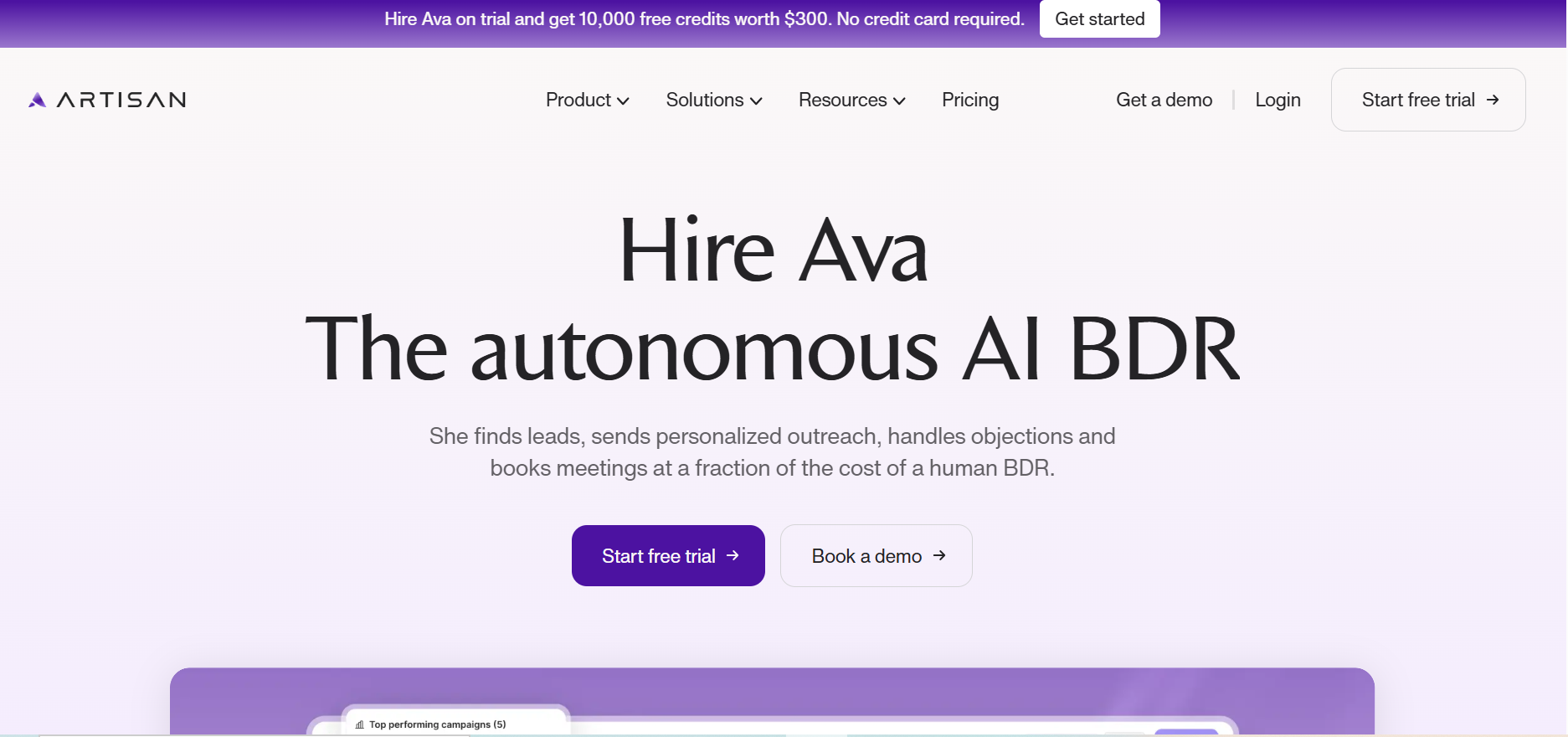
Artisan has become one of the most talked-about AI SDR platforms in recent years.
Its AI agent, Ava, handles prospect identification, outreach generation, follow-up sequences, and meeting booking.
Many organizations are attracted to Artisan because it aims to replace large portions of manual SDR work.
Strengths
* Autonomous prospecting
* Automated lead research
* Personalized outreach generation
* Meeting scheduling capabilities
* Centralized workflow management
Potential Drawbacks
* Requires careful setup
* Significant investment for smaller businesses
* Human review still recommended for high-value accounts
Ideal Customer
Mid-market and enterprise sales organizations seeking large-scale outbound automation.
2. 11x
Best For:
Enterprise outbound sales teams
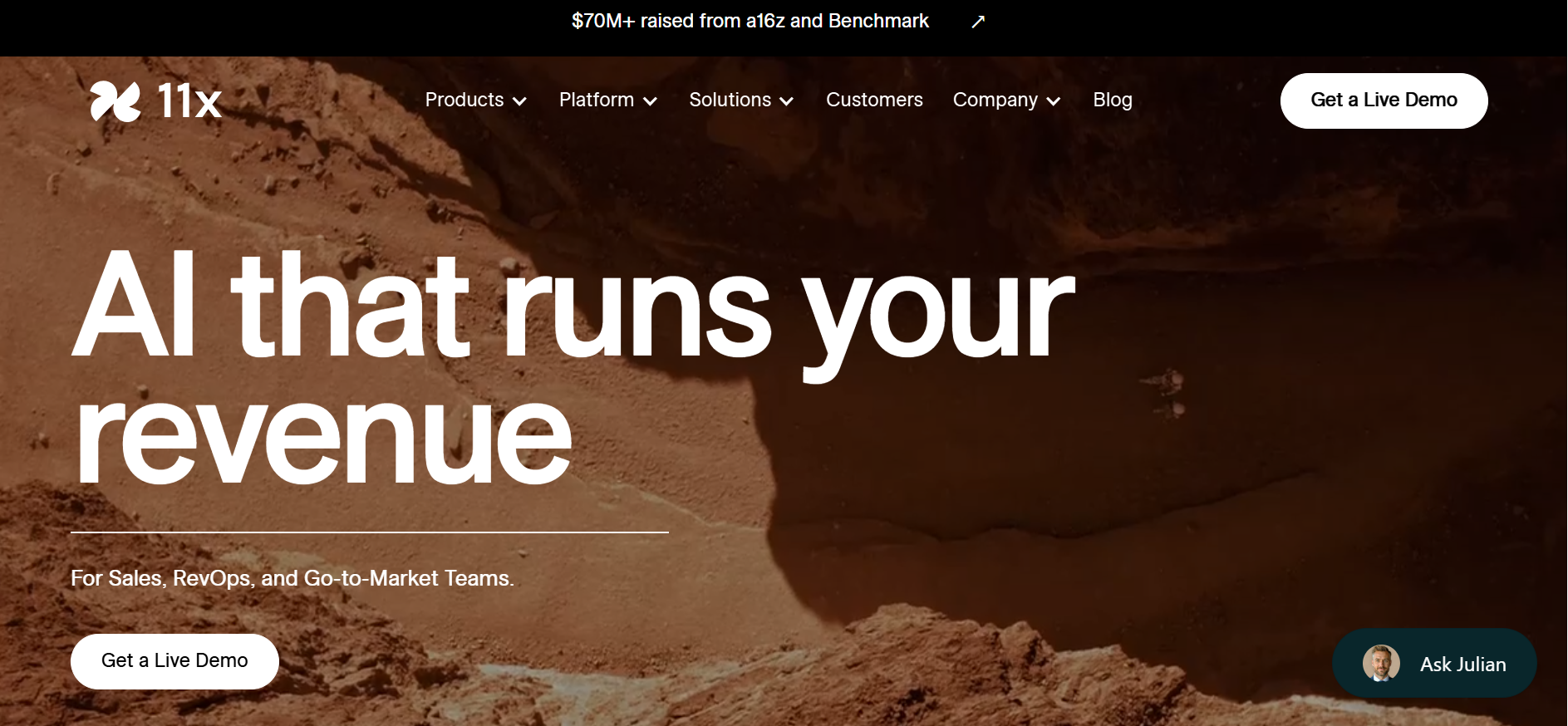
11x positions itself as a digital workforce rather than a traditional software platform.
Its AI agents are designed to manage prospecting activities, engagement, and sales development workflows.
Several teams in our survey highlighted the platform’s ability to operate continuously while maintaining personalized outreach.
Strengths
* High-volume prospecting
* Automated engagement workflows
* Enterprise-focused architecture
* Advanced sales process automation
Potential Drawbacks
* Learning curve for implementation
* Better suited for larger sales teams
Ideal Customer
Companies scaling outbound programs across multiple markets.
3. Regie.ai
Best For:
Organizations that want AI assistance instead of AI replacement
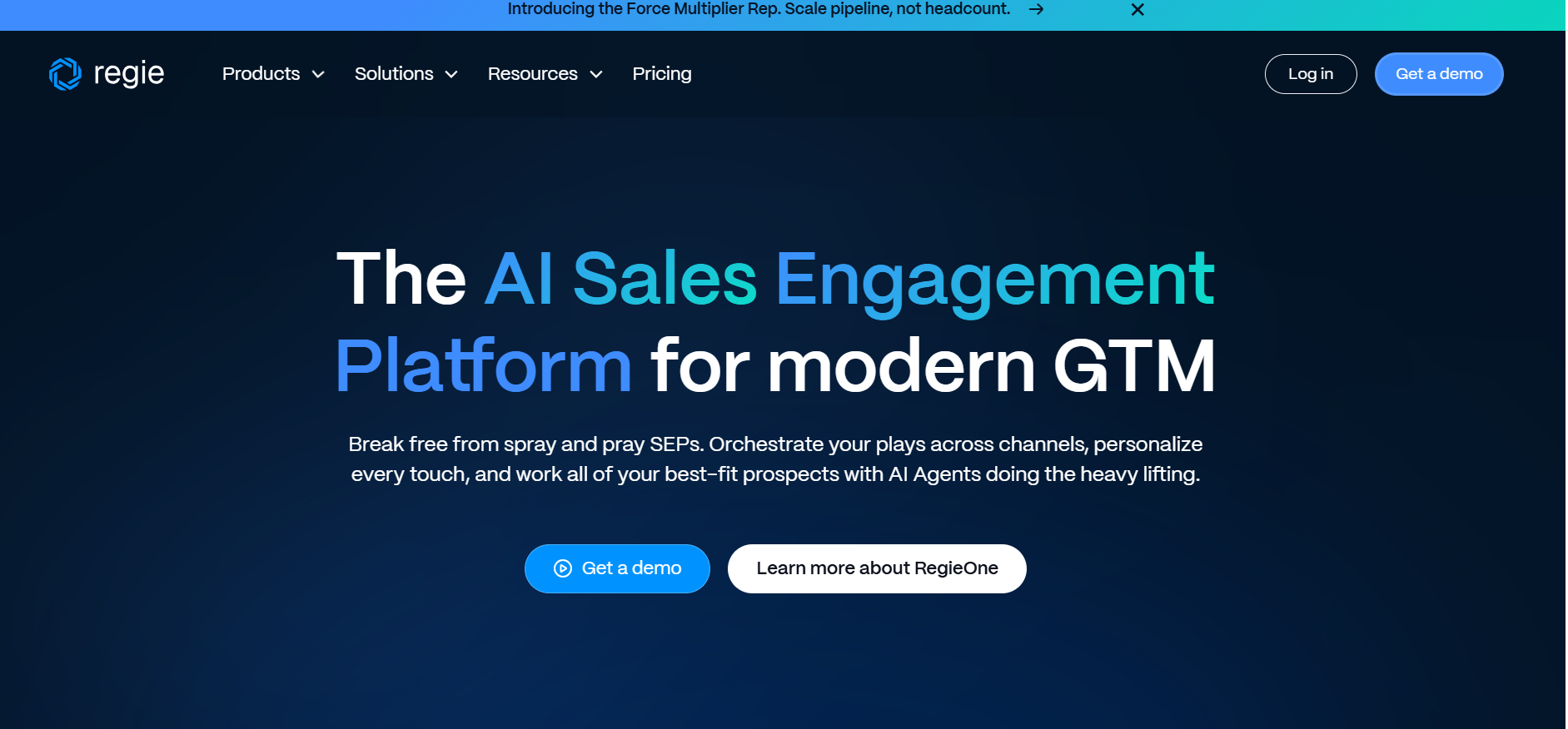
Regie.ai takes a different approach.
Rather than replacing SDRs, it helps them become significantly more productive.
Many surveyed teams appreciated the balance between automation and human control.
Strengths
* Email generation
* Call script creation
* Sequence building
* AI-assisted personalization
* Sales workflow optimization
Potential Drawbacks
* Less autonomous than some competitors
* Requires active SDR participation
Ideal Customer
Teams that believe AI should augment human sellers.
4. Clay
Best For:
Hyper-personalized outbound campaigns
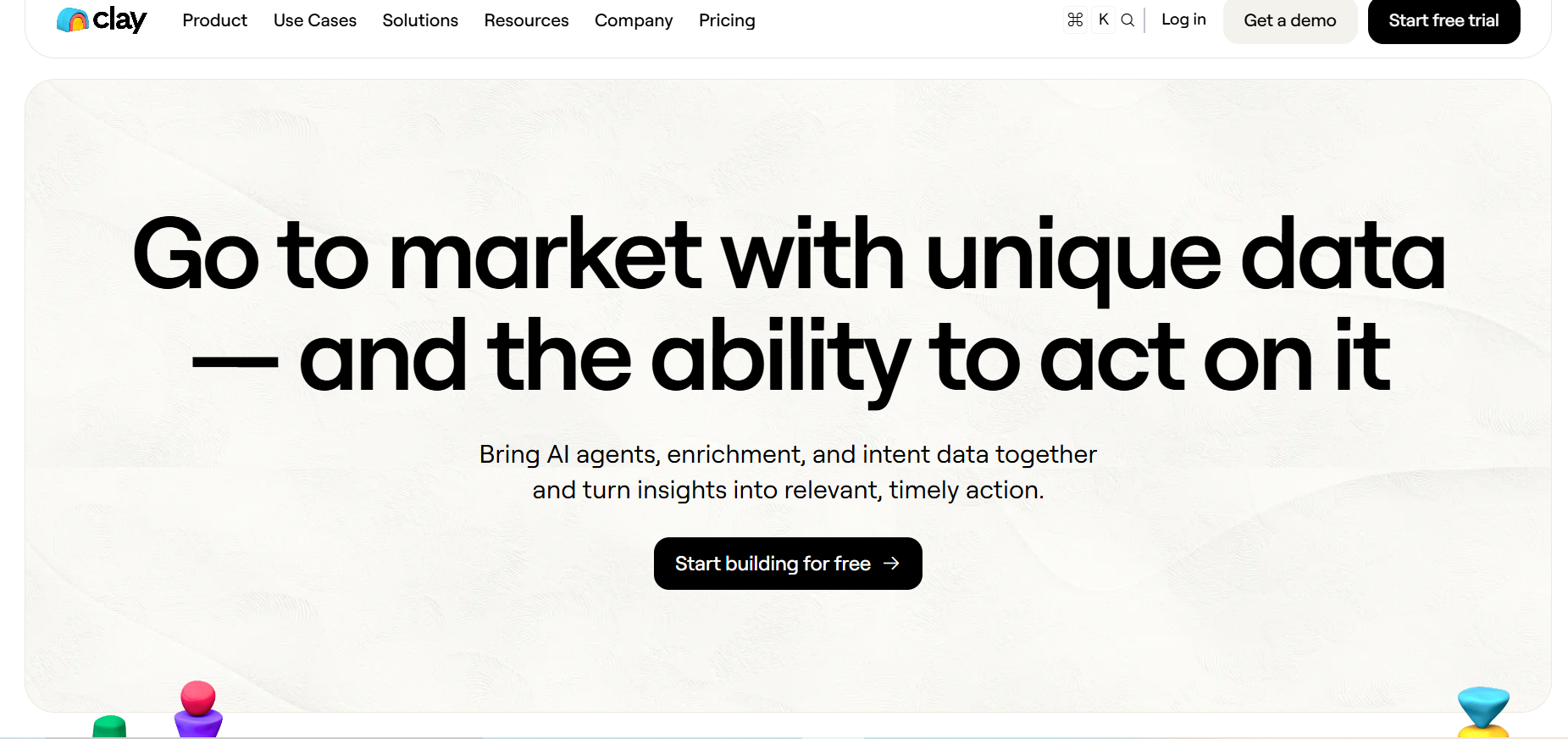
Clay has developed a loyal following among modern go-to-market teams.
While it isn’t a traditional AI SDR, many top-performing sales organizations consider it essential.
Clay specializes in enrichment, prospect intelligence, and personalization workflows.
Strengths
* Data enrichment
* Prospect research
* AI personalization
* Workflow automation
* Integration flexibility
Potential Drawbacks
* Requires workflow design
* Not a complete SDR replacement
Ideal Customer
Teams prioritizing highly personalized outreach.
5. Apollo
Best For:
Startups and growing sales teams
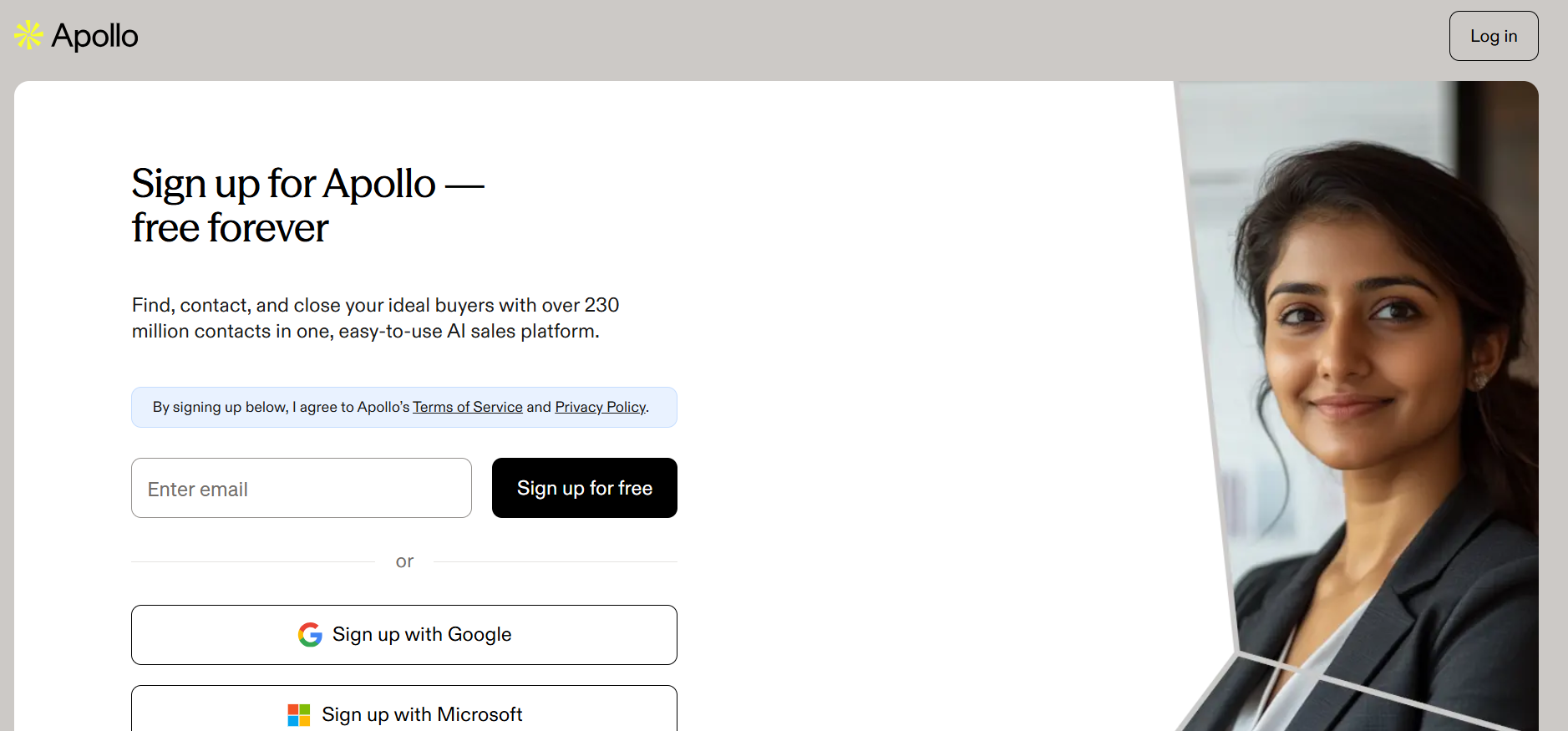
Apollo continues to be one of the most popular sales platforms because it combines data, outreach, sequencing, and AI features in one environment.
Many surveyed teams viewed Apollo as the best balance between functionality and affordability.
Strengths
* Massive prospect database
* Integrated sequencing
* AI writing assistance
* CRM connectivity
* Cost-effective pricing
Potential Drawbacks
* Data accuracy can vary
* AI capabilities less advanced than specialized vendors
Ideal Customer
Growth-stage companies seeking an all-in-one solution.
6. Reply.io
Best For:
Sales teams wanting AI-powered outreach with human oversight
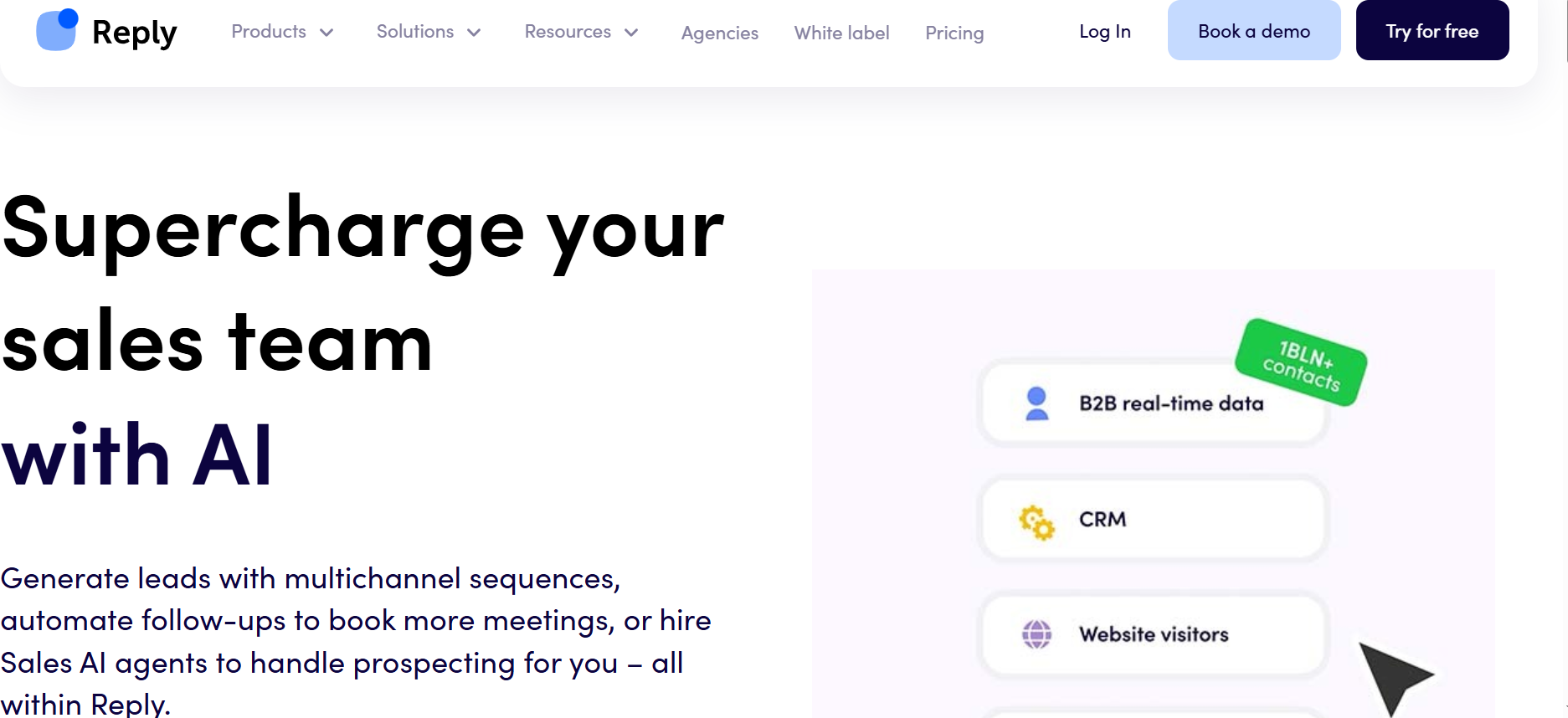
Reply.io’s Jason AI assistant has evolved considerably.
Users reported strong results for automated prospecting and multi-channel engagement.
Strengths
* AI-generated sequences
* Email automation
* LinkedIn outreach
* Meeting scheduling
* Campaign analytics
Potential Drawbacks
* Requires campaign monitoring
* AI quality depends on input data
Ideal Customer
B2B sales organizations running structured outbound campaigns.
7. AiSDR
Best For:
Companies exploring autonomous SDR workflows
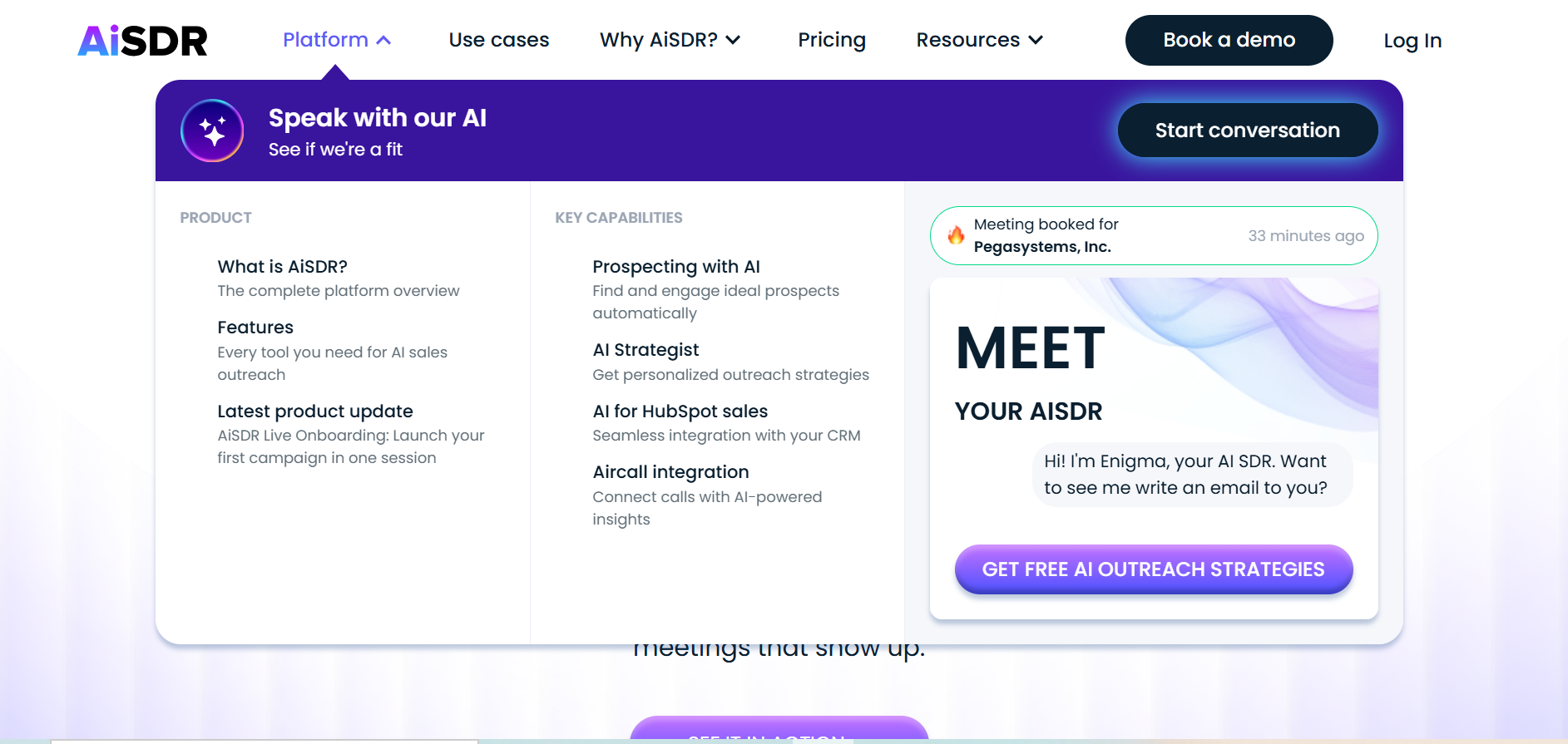
AiSDR focuses heavily on automating prospect engagement.
Several teams appreciated its simplicity compared to more enterprise-oriented platforms.
Strengths
* Automated prospect communication
* Lead qualification
* Follow-up management
* Meeting booking
Potential Drawbacks
* Less customization
* Smaller ecosystem
Ideal Customer
Small and medium-sized businesses.
8. Lavender
Best For:
Improving email performance
Lavender acts more as an AI sales coach than a full SDR platform.
Many teams use it alongside their existing outreach systems.
Strengths
* Email scoring
* Writing optimization
* Personalization suggestions
* Coaching features
Potential Drawbacks
* Not a full SDR solution
Ideal Customer
Teams focused on increasing reply rates.
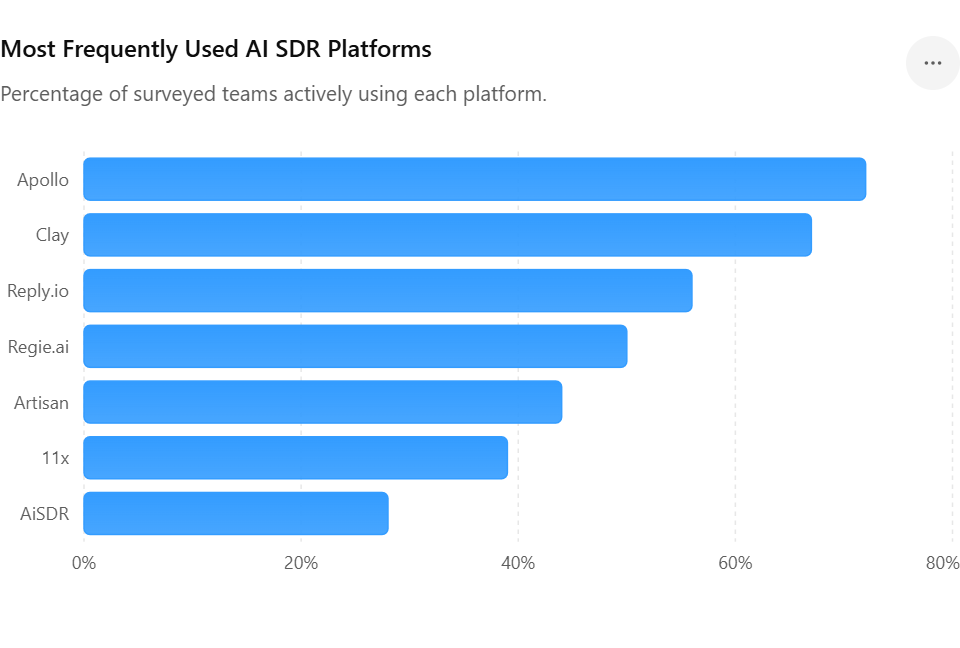
Percentage of surveyed teams actively using each platform.
What Separates Great AI SDR Tools from Average Ones?
The best-performing platforms shared five characteristics.
1. Strong Personalization
Generic outreach no longer works.
Top tools use firmographic data, intent signals, and prospect intelligence to create relevant messaging.
2. CRM Integration
Sales teams consistently rated CRM connectivity as essential.
AI tools should fit existing workflows rather than create new silos.
3. Multi-Channel Outreach
Email alone is becoming less effective.
The strongest platforms combine:
* Email
* LinkedIn
* Phone
* SMS
* Social engagement
4. Lead Intelligence
Successful AI SDRs understand buying signals before initiating outreach.
Intent data increasingly drives campaign performance.
5. Human Oversight
The highest-performing teams never removed humans entirely.
AI created efficiency.
Humans created trust.
Common Mistakes Companies Make
Many organizations fail because they misunderstand what AI SDRs can do.
Mistake 1: Expecting Full Autonomy
AI can automate many tasks.
It cannot fully replace strategic thinking.
Mistake 2: Ignoring Data Quality
Poor CRM data produces poor outreach.
Garbage in equals garbage out.
Mistake 3: Over-Automation
Sending thousands of generic messages often damages brand reputation.
Mistake 4: Measuring Activity Instead of Pipeline
More emails do not automatically mean more revenue.
Pipeline quality remains the ultimate metric.
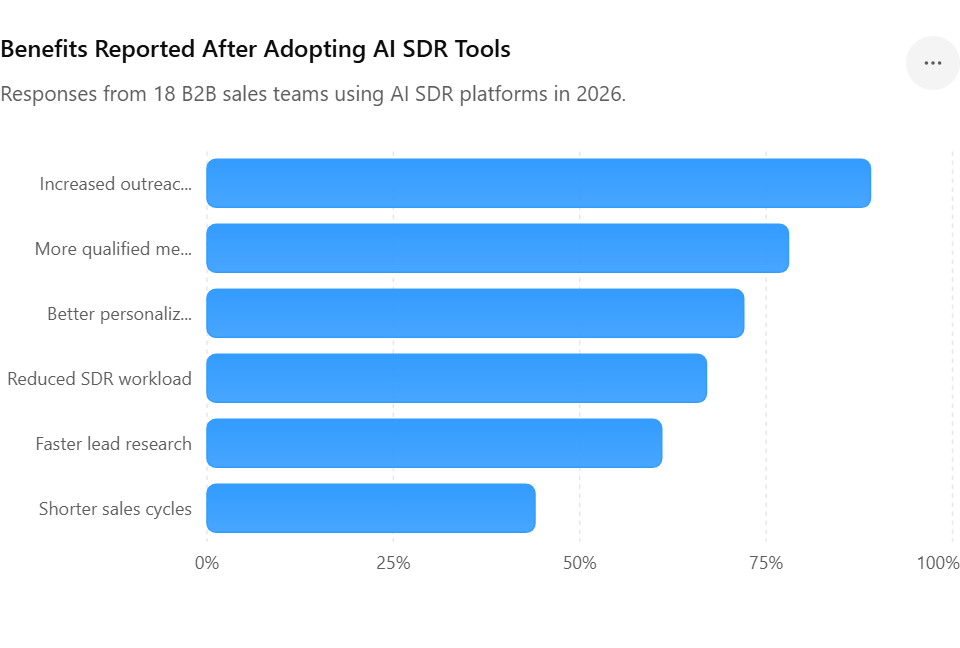
Responses from 18 B2B sales teams using AI SDR platforms in 2026.
The Future of AI SDRs
The next generation of AI SDR platforms will move beyond outreach.
Industry experts expect AI agents to become active participants throughout the revenue cycle.
Future capabilities may include:
* Real-time buyer intent detection
* Autonomous account research
* Meeting participation
* Opportunity qualification
* Revenue forecasting
* Cross-channel engagement orchestration
The companies that benefit most will likely be those that combine AI efficiency with human relationship-building.